
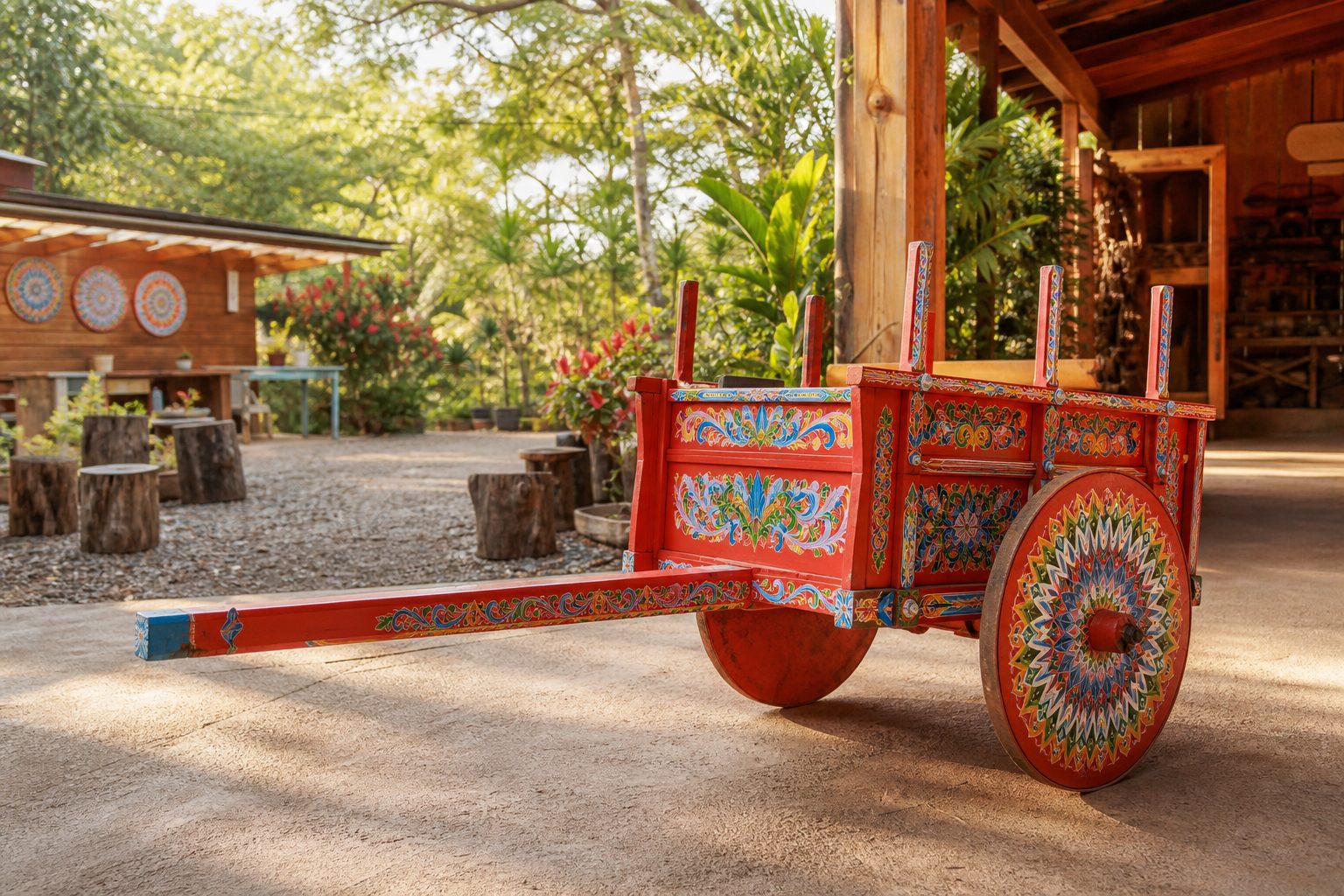
Traditional painted Costa Rican oxcart in a tropical artisan workshop

Costa Rican heritage in color and wood

The Painted Oxcart

A national symbol born from coffee roads, family workshops, and the hand-painted geometry of Sarchi.

Known as La Carreta Tipica

A hand-painted oxcart and one of Costa Rica's most recognizable cultural icons.

Home of the craft Sarchi, Alajuela

A mountain town famous for woodworking, souvenir workshops, and painted carts.

Cultural status UNESCO heritage

The oxherding and oxcart tradition is recognized as intangible cultural heritage.

From work tool to national symbol

A cart that carried more than coffee

In the 19th century, oxcarts helped move coffee from Costa Rica's Central Valley toward the Pacific port of Puntarenas. Their solid wooden wheels handled muddy roads, hills, and long rural routes.

01

Coffee roads

Before trucks and paved highways, the carreta was a practical companion for farmers, families, and exporters.

02

Family identity

Painted wheels and panels became a way to distinguish regions, families, and workshops.

03

Living tradition

Today the carreta appears in parades, homes, gardens, restaurants, and artisan shops as a proud emblem of Costa Rica.
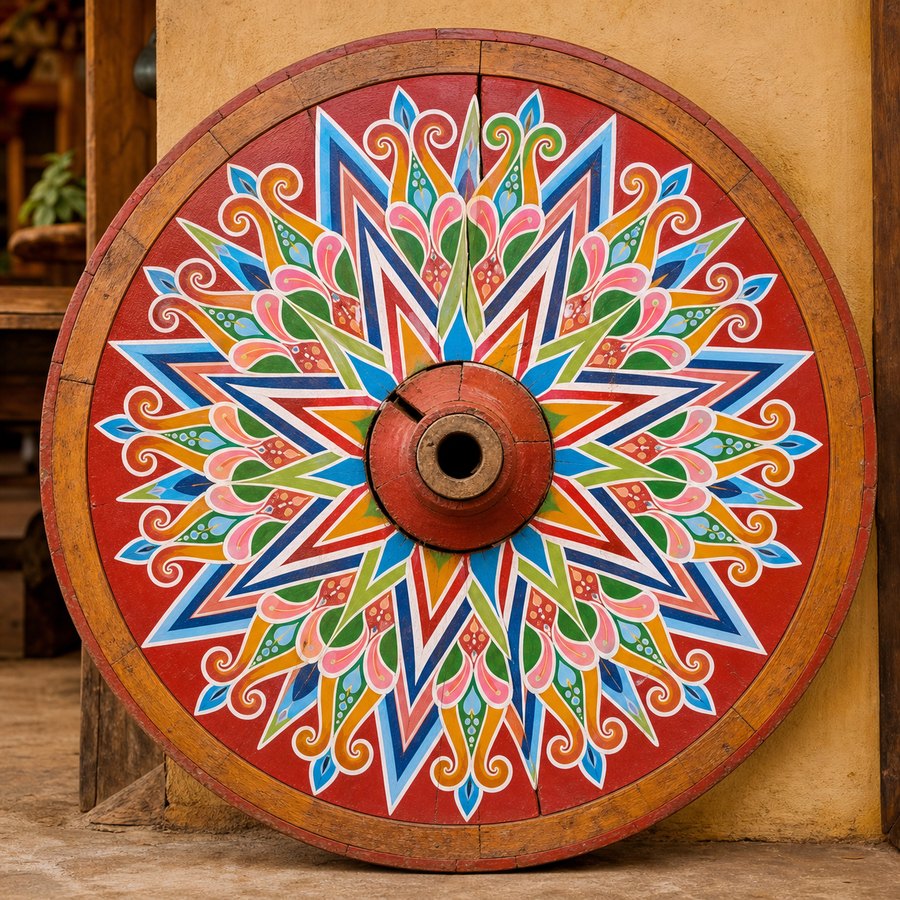
The painted language

Why the wheels look like moving mandalas

The famous designs mix symmetry, flowers, starbursts, curves, dots, and bright contrast. Each cart can share the same visual tradition while still carrying the hand of its painter.

Close-up of a real painted Costa Rican oxcart wheel

How it is made

Wood, wheel, brush, patience

Carving the structure

Artisans shape wood for the box, shaft, panels, and the strong segmented wheels.

Preparing the surface

The cart is sanded and primed so colors stay crisp over wood grain and curves.

Painting by hand

Painters layer geometry, floral forms, outlines, and dots until the cart becomes a moving artwork.

Where to see it

Sarchi and the historic Eloy Alfaro workshop

Sarchi is widely known as Costa Rica's artisan capital. Visitors often look for family workshops, souvenir galleries, the painted oxcart in the town center, and the historic Taller Eloy Alfaro, associated with traditional oxcart making and water-powered machinery.

Sources and further reading